
Installation Training & Support is designed to help contractors and project teams use the BuildBlock ICF system correctly and with confidence. The service focuses on guidance, training and technical support rather than carrying out installation works.
The aim is to ensure that teams understand the system, follow a clear build sequence and avoid common issues when working with insulated concrete formwork, particularly on first-time or early-stage ICF projects.
BuildBlock ICF is installed using a defined sequence known as Stack, Prop, Pour. This method provides a clear framework for constructing ICF walls and underpins the training and support offered.
The first stage is the placement of the forms. Each block is set out on the prepared base course and locked into the next using the moulded interlocking edges. The blocks are fully reversible, which simplifies layout and adjustment on site. Web spacing supports the block during handling and creates regular fixing locations for internal and external bracing. Cut lines on the form allow precise trimming where required.
As courses are added, reinforcement is supported by the moulded rebar seats and snap-in fingers that hold steel in position without ties. This keeps reinforcement stable during the build and maintains the designed spacing throughout the wall.
Once the forms are in place, the structure is propped and aligned. Standard ICF bracing and alignment equipment is used to stabilise the wall, allow fine adjustment and maintain straight lines through the height of the formwork. This stage includes checks on dimensions, plumb, level and set-out before the concrete pour begins.
Web placement inside each block provides reliable fixing points for bracing. This supports the process of holding the form steady during vibration and pour activity, which is essential for maintaining a smooth wall and consistent concrete distribution.
The pour is completed once alignment checks are finished. Concrete is placed in controlled lifts to support flow through corners, around webs and through reinforcement. The open web structure assists movement and helps the concrete reach all areas of the form. Vibration is used where needed to remove voids and achieve a complete fill.
After the pour, the wall remains in position with the insulation forming both faces. The bracing is left in place until the concrete has gained sufficient strength. Once removed, the wall is ready for finishing materials or further construction stages.
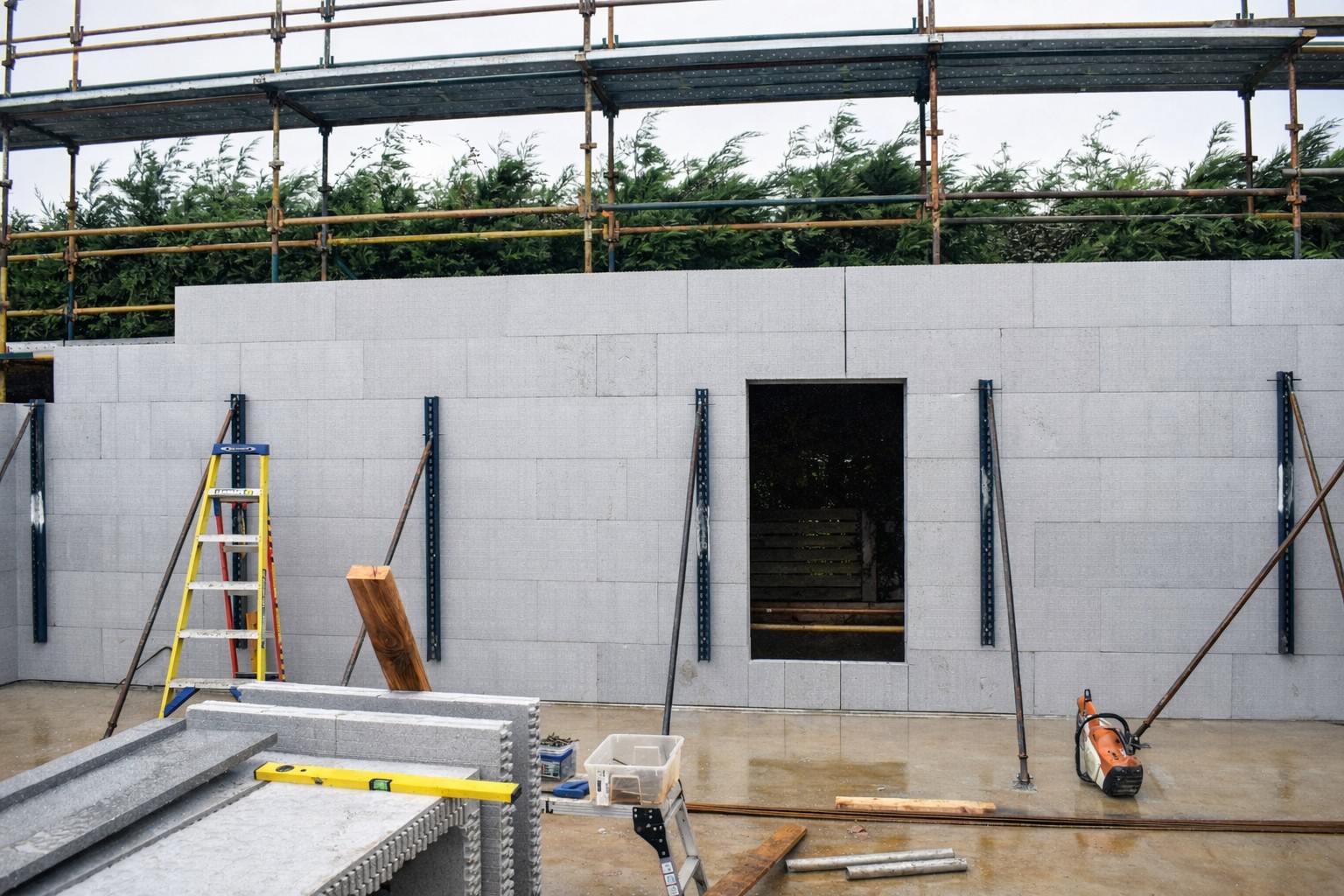
Support starts before the first block goes down. This includes set-out preparation, sequencing, and practical decisions that affect speed and waste on site. Where projects are designed around ICF dimensions from the outset, walls and openings can be planned more efficiently, which supports smoother installation and reduces unnecessary cutting.
On-site support focuses on what makes the difference during delivery:
The goal is not to create dependency. It is to ensure the site team understands the method, so results are repeatable across projects.
A key aim of the system is fast installation without compromising stability. On typical builds, the system can move from first blocks stacked to a poured wall within a short window, often measured in days rather than weeks. Exact timing depends on the project, the crew, the detailing, and site conditions, but the method is built around predictable sequencing.
The BuildBlock system has been through the NSAI modern methods of construction approval process. Part of that work includes a technical guide and a suite of details used to support design teams at early stage. This allows consultants to design with clearer assumptions and helps site teams install with fewer unknowns.


